
Can blogging be a source of passive income?
Many individuals are turning to blogging as a means to generate additional revenue streams. The idea of creating content once and earning money from it repeatedly is appealing.
With the rise of digital media, blogging has become a viable option for those seeking financial freedom. By creating valuable content and leveraging the right strategies, it’s possible to earn a steady stream of passive income.
This article will explore the potential of blogging as a source of passive income and provide insights into how you can get started.
Key Takeaways
- Blogging can be a lucrative source of passive income with the right strategy.
- Creating valuable content is key to attracting and retaining an audience.
- Leveraging digital media can help increase your online presence.
- Financial freedom is achievable through consistent effort and dedication.
- Joining a community of like-minded individuals can help you stay on track.
The Reality of Blogging as a Passive Income Stream
Blogging has become a popular avenue for those seeking to generate passive income, but the reality behind this endeavor is often misunderstood. To grasp the true potential of blogging as a passive income stream, it’s essential to understand what constitutes passive income and how blogging fits into this model.
Defining True Passive Income
True passive income refers to earnings that are generated without actively working for them on a continuous basis. While the initial effort is substantial, the goal is to create a system that continues to yield income with minimal ongoing involvement.
How Blogging Fits into the Passive Income Model
Blogging can be a viable source of passive income when done correctly. By creating high-quality, evergreen content, bloggers can attract a consistent flow of readers and generate revenue through various monetization strategies.
The Initial Active Work vs. Long-term Passive Benefits
The journey to achieving passive income through blogging involves significant upfront work, including content creation, SEO optimization, and audience building. However, as the blog grows, it can lead to substantial long-term benefits with relatively less active work.
| Initial Effort | Long-term Benefits |
|---|---|
| Content creation | Passive income through advertising |
| SEO optimization | Ongoing revenue from affiliate marketing |
| Audience building | Sales of digital products |
If you’re interested in leveraging blogging for passive income, consider joining our thriving community at course.the3dfreedom.com/freedom to learn more about how to succeed in this space.
Understanding the Blogging Business Model
Understanding the intricacies of the blogging business model is crucial for anyone looking to turn their blog into a sustainable source of income. At its core, this model is built around several key components that work together to create a successful and profitable blogging business.
Content Creation as Your Foundation
Content creation is the foundation upon which a successful blogging business is built. High-quality, engaging, and informative content is essential for attracting and retaining a dedicated audience. This content must be optimized for search engines to improve visibility and drive organic traffic to the blog. By focusing on creating valuable content, bloggers can establish themselves as authorities in their niche, fostering trust with their readers.
Building an Audience: The Key to Monetization
Building a loyal and engaged audience is the key to monetizing a blog. This involves not just attracting visitors but also encouraging interaction and creating a community around the blog. Through digital marketing strategies such as email marketing and social media engagement, bloggers can increase their reach and build a loyal following. The larger and more engaged the audience, the more opportunities there are for monetization through various channels.
The Compound Effect of Consistent Blogging
Consistency is crucial in blogging. Regularly posting high-quality content keeps the audience engaged and enhances the blog’s visibility on search engines. Over time, this consistent effort compounds, leading to increased traffic and, consequently, higher income potential. The compound effect of consistent blogging underscores the importance of long-term commitment to content creation and audience engagement.
By understanding and implementing these elements of the blogging business model, individuals can set themselves up for success in the world of blogging and digital marketing.
Can Blogging and Passive Income Really Work Together?
The idea of generating passive income through blogging is enticing, but the reality is more nuanced. While it’s possible to earn money with relatively little active work, achieving true passive income requires significant upfront effort and ongoing maintenance.
The Myth vs. Reality of “Set It and Forget It”
The concept of “set it and forget it” blogging is largely a myth. Successful blogs need regular updates to stay relevant and attract return visitors. However, certain aspects of blogging can become semi-passive over time.
Affiliate marketing, for instance, can become a relatively passive income stream once the initial content is created and traffic starts flowing. For example, a well-optimized blog post about a specific product can continue to attract readers and generate affiliate commissions months after it’s been published.
The Semi-Passive Nature of Successful Blogs
Successful blogs often have a mix of active and passive elements. While creating new content is an active task, maintaining and optimizing existing content can become more passive. Evergreen content, which remains relevant over time, is a key component of a semi-passive blogging strategy.
Income Potential Based on Niche and Strategy
The income potential of a blog varies widely based on the niche and monetization strategies employed. Some niches, like finance and health, tend to be more lucrative than others.
| Niche | Average Monthly Income | Monetization Strategies |
|---|---|---|
| Finance | $1,000 – $5,000 | Affiliate marketing, sponsored content |
| Health and Wellness | $500 – $3,000 | Digital products, affiliate marketing |
| Personal Finance | $800 – $4,000 | Affiliate marketing, display advertising |
Understanding these factors can help bloggers set realistic expectations and choose the most effective strategies for their niche.
7 Proven Ways to Monetize Your Blog
Bloggers have numerous options to transform their passion into profit, leveraging different monetization techniques. The key to successful blog monetization lies in understanding your audience and selecting strategies that align with their needs and preferences.
Display Advertising: Earning While You Sleep
Display advertising is a popular method for bloggers to earn passive income. By partnering with ad networks, bloggers can display targeted ads on their sites, earning revenue based on clicks or impressions.
Ad Networks for Beginners vs. Advanced Bloggers
For beginners, networks like Google AdSense offer a straightforward entry into display advertising. Advanced bloggers may benefit from premium networks like Mediavine or Adthrive, which often provide higher CPM rates.
Optimizing Ad Placement for Maximum Revenue
Strategic ad placement is crucial for maximizing revenue without compromising user experience. Experimenting with different ad formats and locations can help bloggers find the optimal balance.
Affiliate Marketing: Commissions on Autopilot
Affiliate marketing allows bloggers to earn commissions by promoting products or services from other companies. By sharing affiliate links, bloggers can earn a percentage of sales generated through their unique referral link.
Selecting Products That Convert
Choosing the right products is vital for successful affiliate marketing. Bloggers should promote products that are relevant to their audience and have a proven track record of converting well.
Creating Effective Affiliate Content
Crafting compelling content around affiliate products can significantly boost conversion rates. This can include in-depth reviews, tutorials, or comparisons.
Digital Products: Create Once, Sell Forever
Creating and selling digital products is a lucrative monetization strategy. Whether it’s ebooks, courses, or software, digital products can provide a steady stream of income with minimal ongoing effort.
Sponsored Content Opportunities
Sponsored content involves partnering with brands to create content that promotes their products or services. This can be a lucrative option for bloggers with a significant and engaged audience.
Membership and Subscription Models
Implementing membership or subscription models can provide a recurring revenue stream. By offering exclusive content, resources, or services, bloggers can incentivize their audience to subscribe.
| Monetization Method | Initial Effort | Passive Income Potential |
|---|---|---|
| Display Advertising | Medium | High |
| Affiliate Marketing | High | Medium |
| Digital Products | High | High |
Setting Up Your Blog for Passive Income Success
Setting up a blog for passive income success involves several critical steps that bloggers must take. To achieve long-term success, it’s essential to lay a solid foundation.
Choosing a Profitable Niche
The first step is selecting a profitable niche. This involves identifying your target audience and understanding their needs. A profitable niche should have:
- A sizable audience
- Low competition
- High demand for products or services
Researching popular topics and trends can help you identify a niche with potential.
Essential Technical Setup for Long-term Growth
A well-structured technical setup is crucial for long-term growth. This includes:
- Choosing a reliable hosting service
- Installing a user-friendly Content Management System (CMS) like WordPress
- Optimizing your site for mobile devices
Content Strategy That Attracts and Converts
Developing a content strategy that attracts and converts is vital. This involves creating high-quality, engaging content that resonates with your audience. Your strategy should include:
- SEO optimization to improve visibility
- Regular posting to keep your audience engaged
- Calls-to-action to encourage conversions
By focusing on these key areas, you can set your blog up for passive income success.
SEO: The Traffic Engine for Passive Blog Income
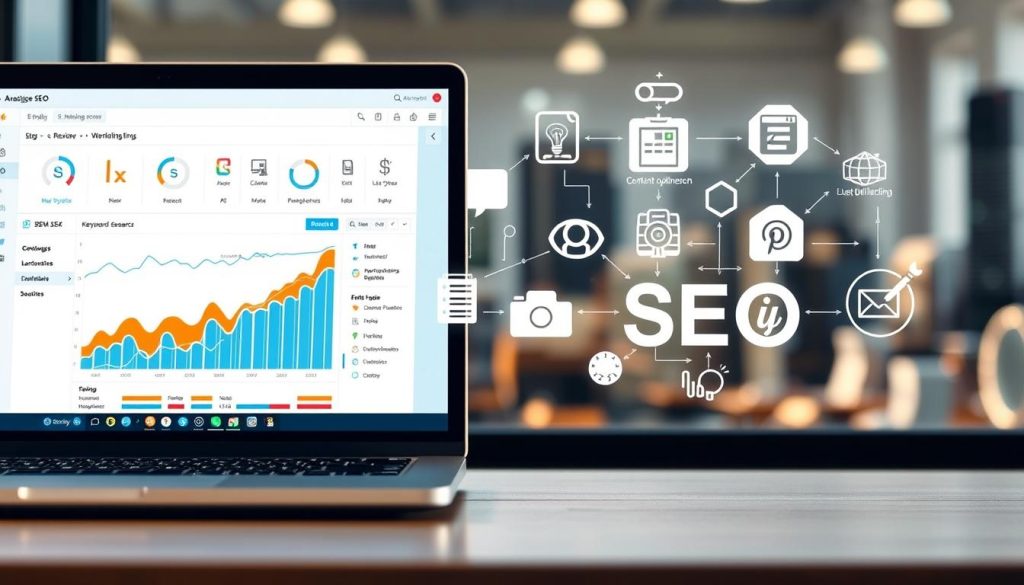
In the digital landscape, SEO stands out as a pivotal element for bloggers aiming to increase their online visibility and earn passive income. By optimizing your blog for search engines, you can significantly improve your chances of ranking higher in search results, thereby driving more organic traffic to your site.
Keyword Research for Long-term Visibility
Effective keyword research is the foundation of a successful SEO strategy. It involves identifying the terms and phrases your target audience uses when searching for content like yours. Tools like Google Keyword Planner, Ahrefs, and SEMrush can help you uncover relevant keywords with high search volume and relatively low competition. Long-tail keywords, being more specific phrases, often have less competition and can drive highly targeted traffic to your blog.
On-page Optimization Techniques
On-page optimization involves tweaking various elements on your blog to make it more search engine friendly. This includes optimizing your title tags, meta descriptions, headings, and content with your target keywords. Ensuring your content is high-quality, engaging, and provides value to your readers is also crucial, as it can improve your blog’s dwell time and reduce bounce rates.
Building Backlinks That Drive Passive Traffic
Backlinks, or links from other websites to your blog, are a critical component of SEO. They signal to search engines that your content is authoritative and trustworthy. Here are some strategies to build backlinks:
- Guest posting on reputable sites
- Creating linkable assets
- Participating in online communities related to your niche
Guest Posting Strategies
Guest posting involves writing content for other websites in your niche. This not only helps you build backlinks but also exposes your blog to a new audience. When guest posting, ensure you’re writing for sites that are relevant to your niche and have a good reputation.
Creating Linkable Assets
Linkable assets are pieces of content that are so valuable, informative, or entertaining that other websites naturally want to link to them. Examples include in-depth guides, original research, and infographics. By creating such assets, you can attract high-quality backlinks that drive passive traffic to your blog.
Digital Marketing Strategies to Amplify Your Blog’s Reach
Effective digital marketing strategies can significantly enhance your blog’s visibility and its ability to generate passive income. By incorporating various digital marketing techniques, bloggers can expand their audience and increase their blog’s monetization potential.
Email Marketing Automation for Passive Sales
Email marketing automation allows bloggers to nurture leads and encourage sales without constant manual intervention. By setting up automated email sequences, bloggers can promote their products or affiliate links to their subscribers at the right time, increasing the chances of conversion.
Social Media Scheduling and Repurposing
Social media scheduling tools enable bloggers to maintain a consistent presence across multiple platforms without spending too much time. Repurposing content, such as turning a blog post into a social media series, can also help in reaching a wider audience.
Pinterest: The Overlooked Traffic Goldmine
Pinterest is a powerful platform for driving traffic to blogs, especially for niches related to lifestyle, DIY, and fashion. By optimizing pins with relevant keywords and creating eye-catching graphics, bloggers can attract significant traffic.
Leveraging AI Tools to Scale Your Content Creation
AI tools can help bloggers scale their content creation by assisting with research, suggesting topics, and even drafting posts. This can significantly reduce the time spent on content creation, allowing bloggers to focus on other aspects of their business.
| Digital Marketing Strategy | Primary Benefit |
|---|---|
| Email Marketing Automation | Increased Passive Sales |
| Social Media Scheduling | Consistent Online Presence |
| Pinterest Optimization | Targeted Traffic |
| AI Tools for Content | Scalable Content Creation |
By implementing these digital marketing strategies, bloggers can not only amplify their blog’s reach but also create a more sustainable and passive income stream.
The Timeline: When Can Blogging Become a Source of Passive Income?
The timeline for blogging to become a significant source of passive income varies, but it follows a general pattern. As blogger and entrepreneur, Michelle Schroeder-Gardner, notes, “The key to success is to be consistent and patient.” Understanding this timeline helps bloggers set realistic expectations and milestones.
Month 1-3: Foundation Building Phase
During the initial months, the focus is on building a solid foundation. This includes setting up the blog, creating high-quality content, and starting to build an audience. As stated by
“Consistency is key when it comes to blogging. Regularly posting high-quality content is crucial for attracting and retaining an audience.”

Month 4-12: Growth and Initial Monetization
As the blog grows in terms of content and audience, it’s possible to start monetizing it through various strategies such as display advertising, affiliate marketing, and sponsored content. Income starts to trickle in, but it’s often not substantial enough to be considered a full passive income.
Year 2+: Scaling to Significant Passive Income
After a year or more, successful blogs can start generating significant passive income. This is due to compounded growth from consistent content creation, SEO efforts, and diversified income streams. As blogger Pat Flynn says, “The power of passive income lies in its ability to generate revenue with minimal ongoing effort.”
Essential Tools and Resources for Passive Income Bloggers
The journey to turning a blog into a passive income stream is significantly eased with the right tools and resources. As bloggers navigate the complex landscape of digital content creation, monetization, and optimization, having the appropriate tools at their disposal can make a substantial difference.
Hosting and Platform Recommendations
Choosing the right hosting and platform is crucial for the foundation of a successful blog. Reliable web hosting services such as Bluehost or SiteGround offer stability and security. For platforms, WordPress remains a top choice due to its flexibility and extensive customization options.
SEO and Keyword Research Tools
To maximize visibility, bloggers need effective SEO and keyword research tools. Tools like Ahrefs and SEMrush provide comprehensive insights into keyword trends, competitor analysis, and backlink tracking, which are essential for optimizing content.
Analytics and Income Tracking Software
Understanding blog performance and income streams is vital. Google Analytics is indispensable for tracking website traffic and user behavior. For income tracking, integrating affiliate marketing dashboards and e-commerce analytics can provide a clear picture of revenue streams.
Automation Tools to Reduce Active Work
To achieve true passive income, bloggers must leverage automation tools. Tools like Hootsuite for social media scheduling and Zapier for workflow automation can significantly reduce the need for active, manual work, allowing bloggers to focus on strategy and content creation.
Conclusion: Is Blogging the Right Passive Income Path for You?
Blogging can be a viable source of passive income, but it requires dedication, persistence, and a well-thought-out strategy. As discussed, creating valuable content, building an audience, and leveraging various monetization methods are crucial to achieving success in blogging.
To determine if blogging is the right passive income path for you, consider your interests, expertise, and willingness to adapt to the ever-changing digital landscape. With the right mindset and skills, you can create a profitable blog that generates passive income.
If you’re ready to start your blogging journey, join our thriving community at course.the3dfreedom.com/freedom to learn from experienced bloggers and stay updated on the latest trends and strategies in passive income generation through blogging.
FAQ
What is the most effective way to monetize a blog for passive income?
The most effective way to monetize a blog for passive income involves a combination of strategies, including display advertising, affiliate marketing, and selling digital products. Utilizing SEO techniques to drive organic traffic and leveraging email marketing automation can also significantly enhance passive income potential.
How long does it take for a blog to generate significant passive income?
The timeline for generating significant passive income from a blog varies, but typically, it takes around a year or more of consistent effort to build a sizable audience and implement effective monetization strategies. Factors such as niche selection, content quality, and marketing efforts play a crucial role in determining the income potential.
What role does SEO play in creating a passive income blog?
SEO is crucial for driving organic traffic to a blog, which is essential for generating passive income. By conducting thorough keyword research, optimizing on-page elements, and building high-quality backlinks, bloggers can improve their site’s visibility in search engine results, leading to sustained traffic and income.
Can affiliate marketing be considered a truly passive income stream?
Affiliate marketing can be a relatively passive income stream once the initial setup is complete. By creating content that promotes affiliate products and continues to attract traffic over time, bloggers can earn commissions with minimal ongoing effort. However, periodic optimization and content updates are necessary to maintain and grow affiliate income.
How important is choosing a profitable niche for blogging success?
Choosing a profitable niche is vital for blogging success and generating passive income. A niche with high demand, relatively low competition, and monetization potential can significantly impact a blog’s ability to attract and engage a target audience, ultimately driving revenue.
What are some essential tools for managing and optimizing a passive income blog?
Essential tools for managing and optimizing a passive income blog include hosting and platform solutions like WordPress or Shopify, SEO and keyword research tools such as Ahrefs or SEMrush, analytics software like Google Analytics, and automation tools that streamline content creation and marketing tasks.
Is it necessary to have technical expertise to start a blog for passive income?
While having technical expertise can be beneficial, it’s not necessarily a barrier to starting a blog for passive income. Many blogging platforms offer user-friendly interfaces and resources that can help beginners set up and manage their blogs. Additionally, leveraging AI tools and outsourcing certain tasks can also help mitigate the need for extensive technical knowledge.